About
Asavin Wattanajantra
Independent editorial intelligence and applied AI adviser
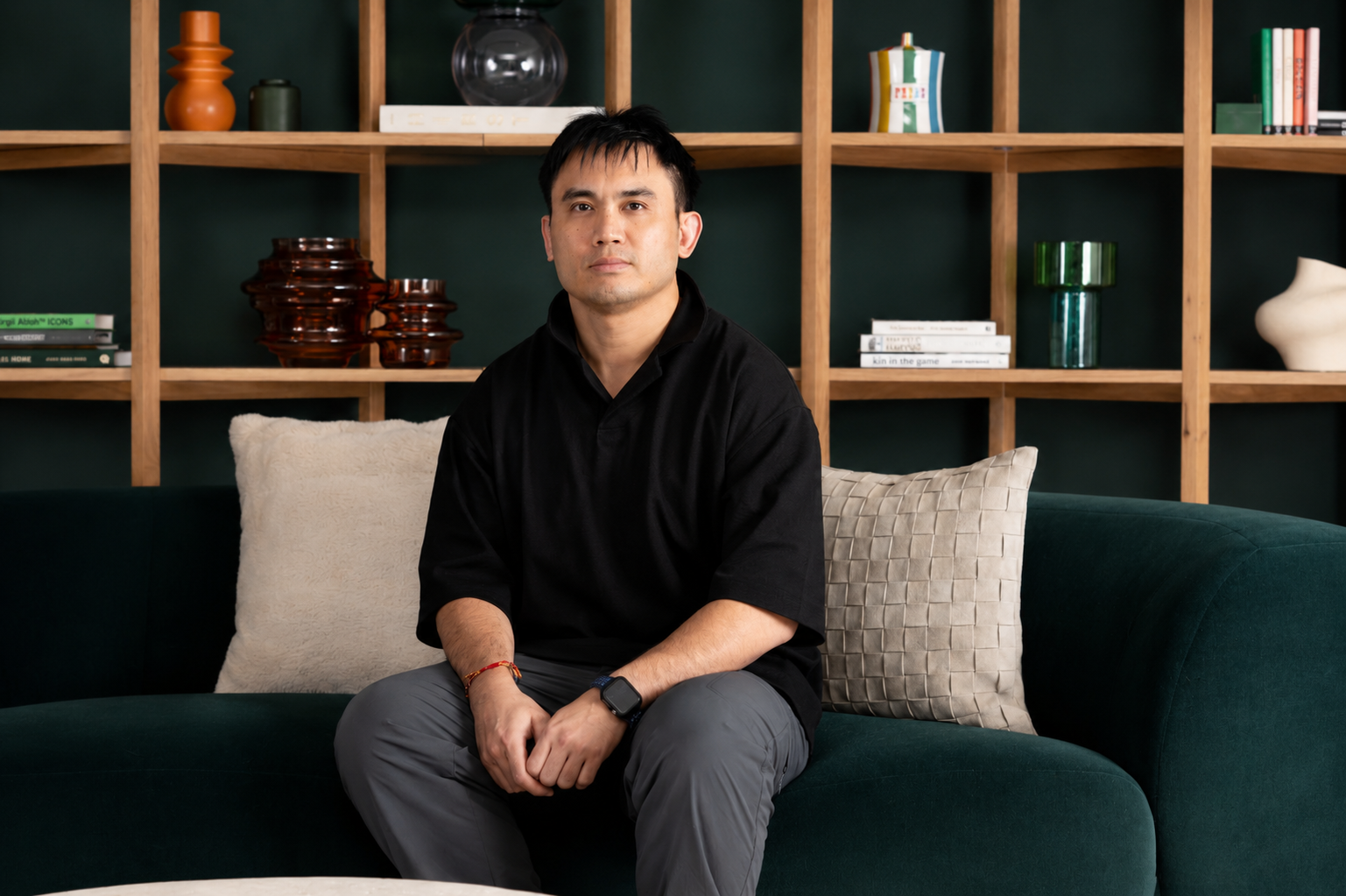
I run Editorial Intelligence as an independent advisory practice for B2B teams dealing with a problem that content production alone cannot solve: the organisation has research, customer evidence and expertise, but cannot always connect it to better decisions. I help teams understand the evidence they already have, work out what is missing and apply the learning to narrative strategy, AI-mediated discovery and reusable editorial workflows.
Two useful diagnostic starting points are: an AI visibility audit or a narrative audit. For teams whose problem is a workflow that keeps losing what it learns, there is also a founding knowledge-workflow pilot. They are not compulsory stages: when the need is clear, I can scope research, GEO-informed editorial work or an applied AI workflow directly. Each engagement addresses a bounded problem and produces a useful output, not a promise of company-wide transformation.
The ideas on this site emerged from practical work — most extensively at Sage, where programmes like Hidden Hours, Winning in Small and Trusted AI developed into something beyond content campaigns: knowledge systems designed to strengthen with every new cycle of evidence.
One current application is AI-mediated discovery — often described as AI visibility, GEO (generative engine optimisation), AEO (answer-engine optimisation), AI search visibility or LLM visibility. I treat those labels as different names around a wider editorial problem: what questions matter, what evidence exists, what needs to be learned or proved, how that knowledge should be structured and where it needs to appear so people and AI systems can use it. The AI visibility framework and GEO-informed thought leadership working note show how that application fits inside the wider discipline.
Where this came from
Editorial Intelligence grew from two decades of practice across journalism, publishing, content strategy, thought leadership and research programmes. One instinct connected the work: the most valuable thing to do with evidence isn't simply publish it, but connect it, develop it and let it inform what comes next.
AI made accumulated knowledge faster to structure and navigate. It did not decide what the evidence meant. That gap — between evidence collected and evidence understood — gave a name to the discipline I'd been practising.
Editorial Intelligence.
How the practice developed
I began as a technology journalist at publications including IT Pro and CNET, learning to question claims, interpret technical subjects and find what matters to an audience. Freelance and editorial work alongside it — The Inquirer, V3, SC Magazine, TechEye — ran from cybersecurity and emerging technology to consumer electronics.
That is where the habit of asking what the evidence actually supports came from, and it is the part of the training that has survived every change of job since.
At Metia, I translated complex products and ideas for developer and IT audiences, working largely on Microsoft accounts, including through an always-on Microsoft developer-community programme connecting editorial judgement, audience evidence and distribution.
At Bite, I delivered content strategy and PR consultancy for technology clients including Pure Storage, BAE Applied Intelligence, Palo Alto Networks, Avanade — and Sage, which I would later join in-house. Web copy, case studies, speeches and award entries: the unglamorous range that teaches you what different formats are actually for.
As marketing manager at open-source agency Deeson, I worked where technical expertise, community and commercial positioning meet.
At RED Consultancy, I led copywriting across technology and corporate accounts, developing thought leadership, reports and campaign narratives — including project-managing the Gumtree Trust & Safety Report 2017, which is where research-led narrative work started to become the thing I did rather than one thing among several.
Those were the agency years — Metia, Bite, Deeson and RED, across B2B technology marketing, PR and open source — and they are where my B2B grounding came from. Agency work is where you learn how the thing actually gets made: the research behind a single line, the rounds of sign-off, and the distance between what a client asks for and what the problem requires.
At Sage, in-house rather than agency side, the practice expanded into research-led narratives including Hidden Hours and Winning in Small, where I led the narrative programmes, and Trusted AI. More recently, that work has extended into AI-mediated discovery and GEO-informed editorial strategy: using buyer and practitioner questions, existing evidence, content gaps, video, events and product content to decide what needs to be answered, evidenced or created before optimisation begins. Editorial Intelligence is the synthesis: editorial judgement applied to evidence, expertise and organisational knowledge.
The more personal explanation of how journalism, technical curiosity and AI came together →
What those programmes produced, and what I won't claim for them →
The discipline, the OS and the practice
Editorial Intelligence is the discipline: how organisations develop evidence into better decisions, stronger narratives and reusable knowledge.
Editorial Intelligence OS makes it repeatable through frameworks, methods, assessments and AI workflows.
Consulting applies it to an organisation's editorial capability, narrative systems and evidence infrastructure.
Experience brings together the professional background, skills and selected work behind the practice.
It is being worked out in public
None of it is finished, and this site isn't a brochure for a completed method. Editorial Intelligence is a set of propositions rather than a doctrine, and the propositions are being tested in the open — which means publishing the parts that don't yet hold alongside the parts that do.
The site is also becoming a public testing environment. I publish ideas, watch what reaches people outside my existing network, pay attention to what gets saved, challenged, followed or ignored, and use those signals as another form of evidence. The aim isn't to build a personal content machine. It's to build an independent audience around a useful body of thinking — and let that audience help reveal which questions are worth developing further.
That independence is useful in both directions. Work inside organisations produces difficult, real problems; public experimentation produces external feedback from people who have no obligation to care. The loop is increasingly practice → idea → public experiment → audience signal → learning → better practice. Confidential employer knowledge stays confidential. What carries across is the general professional learning.
That shows up in the writing rather than being claimed for it. Pieces carry a section naming what they don't prove. Arguments get extended when the thinking moves on, and the Working notes carry the date they were revised next to the date they were published. Some get corrected against evidence after publishing, including against evidence that contradicted what I'd just argued.
The discipline is being able to say in advance what would count as being wrong. It's why the proof page lists what I won't claim, and why the practitioner research is designed to find where the methodology doesn't hold rather than to confirm it. A method that only ever confirms itself isn't one.
Writing portfolio
My published work — articles, research narratives and editorial projects — is collected on Authory.
Get in touch
If your team has useful evidence nobody can quite bring together, questions about AI-search authority, or a recurring editorial workflow that keeps losing its learning, explore the advisory services or tell me about the problem.
I'm also speaking with practitioners outside my own B2B technology context to pressure-test Editorial Intelligence. See the open invitation to compare notes →
New to Editorial Intelligence? Start here →